
Ask an experienced pilot what separates a good aviator from a great one, and the answer is rarely raw stick and rudder skill. It is judgment, situational awareness, and the ability to make sound decisions when something unexpected happens. Those are precisely the qualities that are hardest to teach through repetition alone, and precisely where technology and simulation are now making the biggest difference in how pilots are trained.
Beyond Muscle Memory
Traditional flight training has always excelled at building procedural competence. Checklists get memorized, control inputs become automatic, and standard maneuvers get practiced until they require little conscious thought. That kind of automaticity matters, but it only covers part of what makes a pilot genuinely capable.
Real flying regularly presents situations that do not match any single rehearsed procedure exactly. A pilot needs to recognize what is happening, weigh the available options, and act, often with incomplete information and limited time. Building that kind of judgment requires exposure to variety and consequence, not just repetition of the same scenario, and that is exactly what modern simulation technology is built to provide.
Simulation as a Judgment Laboratory
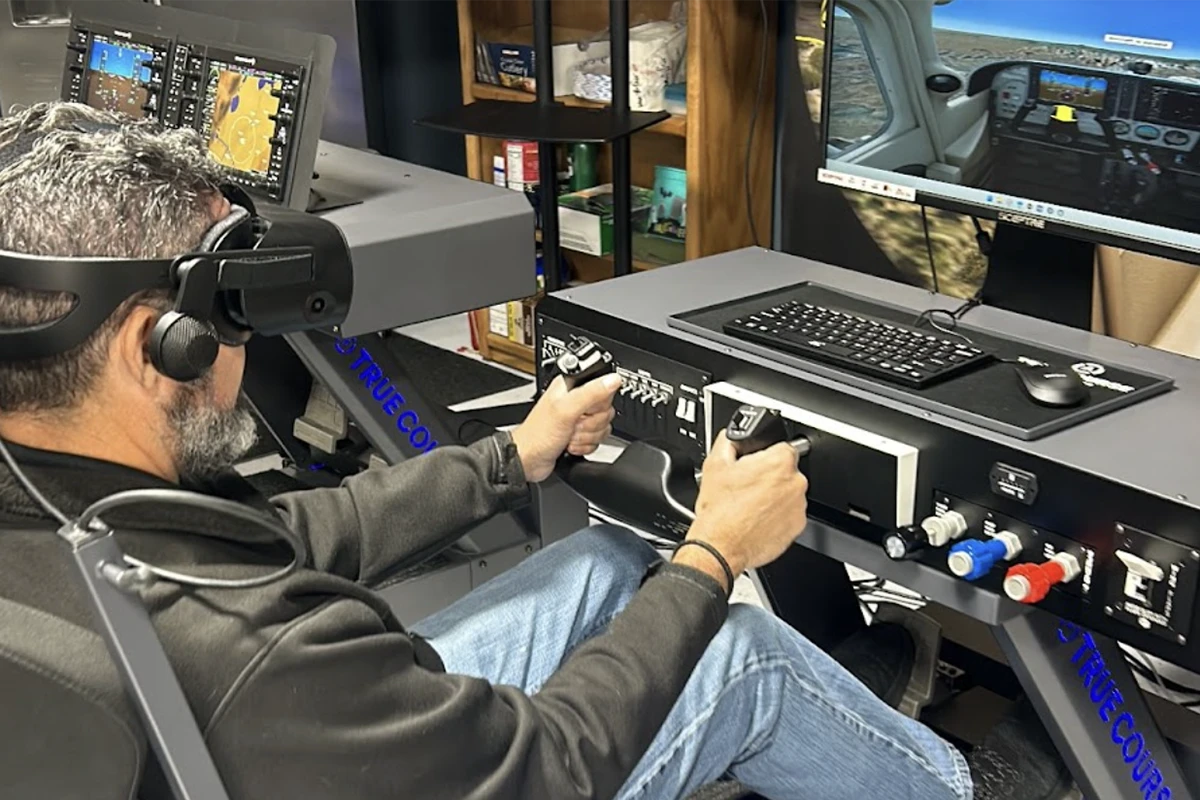
High fidelity simulators have become far more than a tool for practicing procedures safely. They now function as a genuine laboratory for decision making, allowing instructors to construct scenarios that deliberately test judgment rather than just technical execution.
A well designed simulator session might present a problem with no single correct answer, forcing a trainee to weigh competing priorities, divert to an unfamiliar airport, manage a partial system failure, or handle an ambiguous situation, and then debrief not just on what they did, but on how they reasoned through it. This kind of training builds the same kind of decision making muscle that used to develop only slowly, over years of real world flying experience, compressing years of pattern exposure into a much shorter and far safer timeframe.
Technology has also made these scenarios far more realistic and varied than they once were. Visual systems, motion platforms, and dynamic scenario generation mean a trainee can encounter a much broader range of conditions and failures than they would ever naturally experience in real flight hours alone, building a wider base of pattern recognition to draw on later.
Technology That Adapts to the Learner
Smarter training is not only about better scenarios, it is also about training that responds to the individual in front of it. Adaptive systems can track a trainee's specific strengths and weaknesses across every session, adjusting the difficulty and focus of future training accordingly, rather than moving every student through an identical fixed sequence regardless of how they are actually performing.
This kind of personalization means struggling students get more support exactly where they need it, while stronger students are not held back repeating material they have already mastered. The result is training that is calibrated to the person, not just the syllabus, producing pilots who are consistently well prepared rather than unevenly so depending on how well the standard curriculum happened to fit them.
Building Pilots Who Think, Not Just React
The ultimate goal of combining technology and simulation is not simply to produce pilots who can execute procedures flawlessly. Procedures matter, but aviation's hardest moments are rarely the ones with a clean procedural answer already written down. They are the ones that require a pilot to think clearly, weigh options, and make a sound judgment call under pressure.
By using simulation to deliberately build that judgment, and technology to personalize how each pilot develops it, modern training programs are producing aviators who are not just technically proficient, but genuinely prepared for the unpredictable nature of real flight. That combination, procedural skill paired with sound judgment, is what actually defines a smarter pilot, and it is increasingly what today's training technology is built to deliver.
Share this post